
A Filipino Christmas Tradition
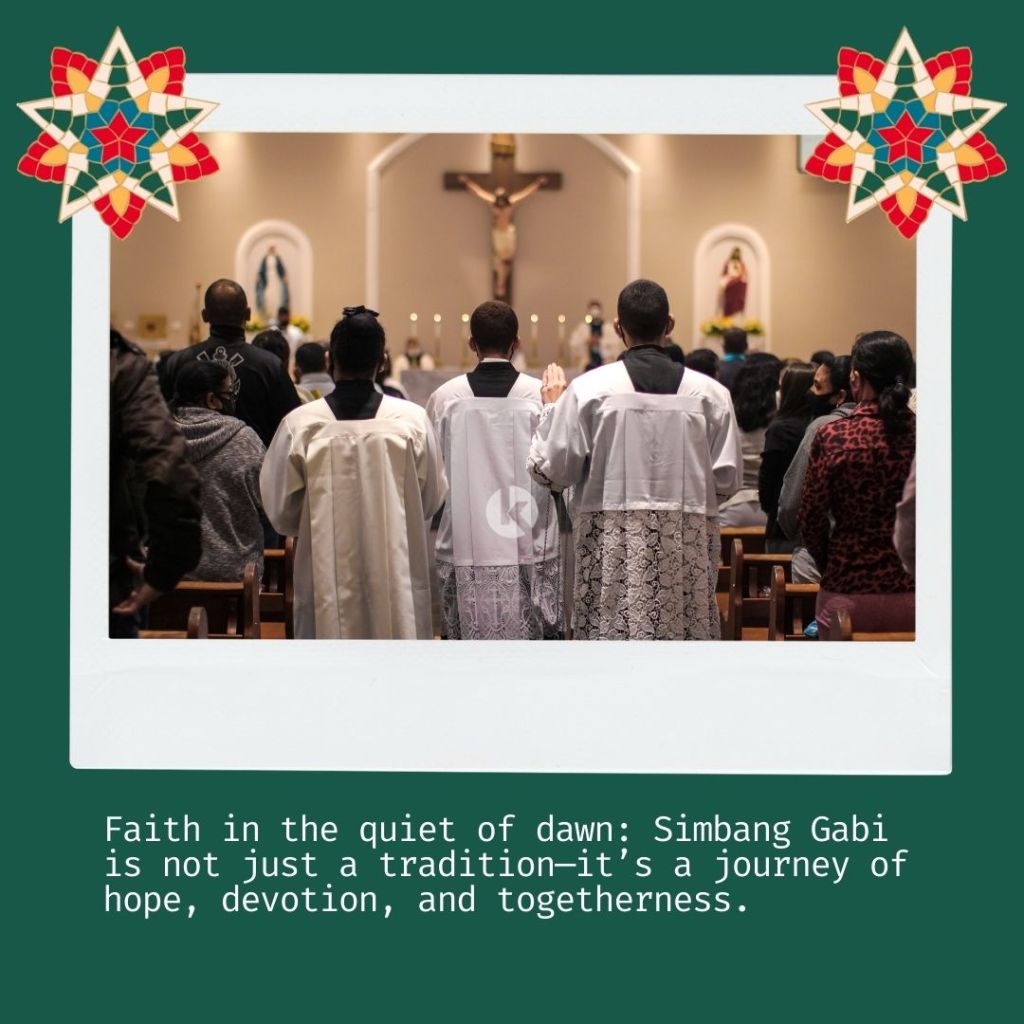
Simbang Gabi, a beloved Filipino Christmas tradition, is more than just a religious celebration; it’s a time-honored practice deeply rooted in faith, culture, and community. Let’s take a closer look at its history, significance, and its evolving role in the lives of Filipinos today.
The origins of Simbang Gabi trace back to the Spanish colonization of the Philippines in the 17th century. The Spanish missionaries introduced the practice as a nine-day series of dawn masses, or Misa de Gallo, held from December 16 to 24, leading up to Christmas Eve.
The early morning schedule was created to accommodate Filipino farmers who needed to work in the fields during the day. These masses allowed them to fulfill their religious obligations before starting their daily labor. This tradition highlights the adaptability of faith to cultural and practical needs, a hallmark of Filipino religiosity.

Today, Simbang Gabi remains a cherished Christmas tradition in the Philippines. Held in churches across the country, the mass starts as early as 3 or 4 AM. The practice symbolizes the anticipation and preparation for the birth of Christ, embodying the spirit of Advent.
Simbang Gabi is also known by other names, such as:
- Misa de Gallo (Spanish for “Rooster’s Mass”)
- Aguinaldo Masses (a gift to honor the birth of Christ)
It is believed that completing all nine days of Simbang Gabi grants a special favor or answered prayer, adding a layer of devotion to this celebration.
While its religious roots remain, Simbang Gabi has taken on a social dimension, particularly for the younger generation. Many youths treat it as an opportunity to bond with friends, meet significant others, or simply enjoy the festive atmosphere.
I’ve observed a pattern over the years:
- Day 1: Churches are packed with attendees, eager to start the tradition.
- Middle Days: Attendance dwindles as the novelty wears off.
- Final Day: Crowds return, eager to complete the nine days or enjoy the special feeling of Christmas drawing near.
This reflects a mix of religious devotion and cultural celebration. While some come for the prayers, others are drawn by the sense of community, the festive vibe, or even the allure of Filipino Christmas delicacies like bibingka and puto bumbong sold outside churches.
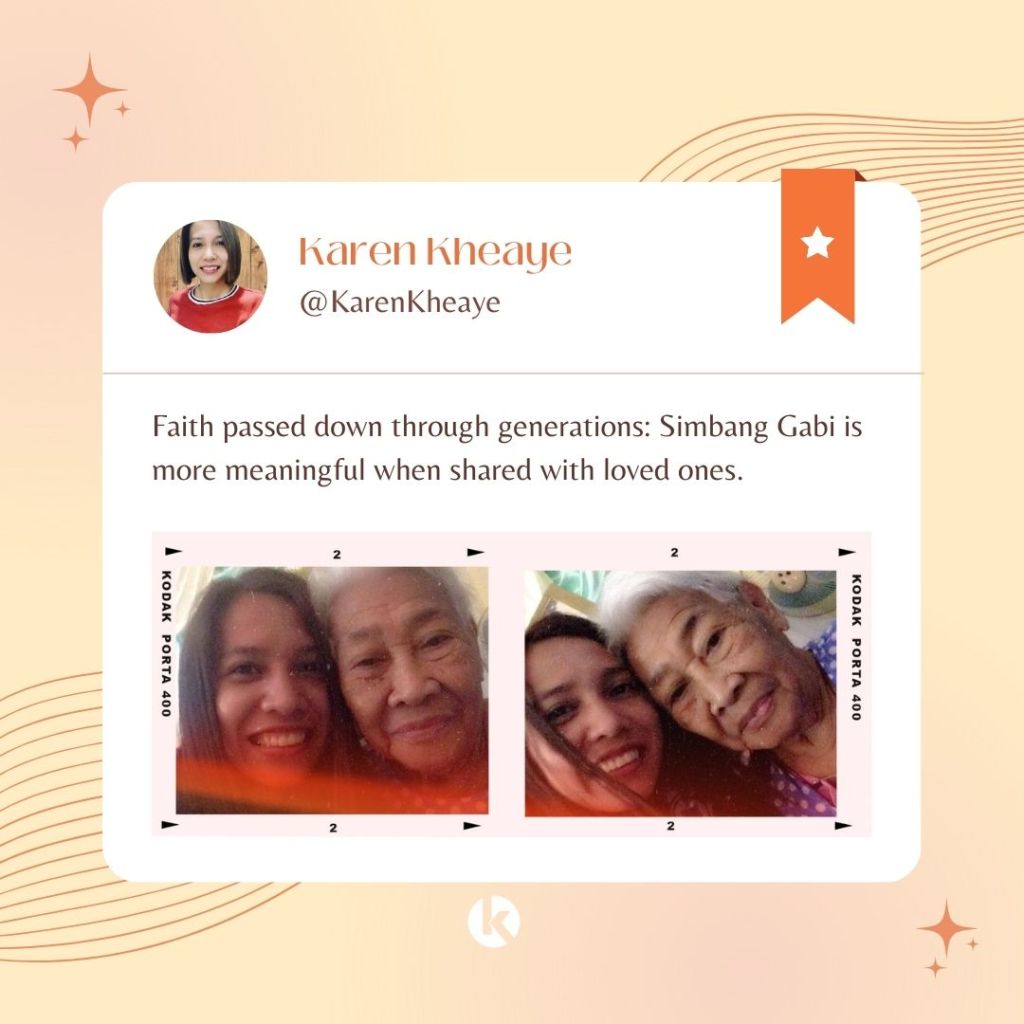
Whenever Simbang Gabi comes, I remember my Lola. When she was still alive, I would always accompany her to mass. Those early mornings with her weren’t just about following tradition—they were moments of faith, love, and connection.
My Lola’s unwavering devotion taught me the importance of Simbang Gabi, not just as a religious obligation, but as a celebration of hope and togetherness. Waking up in the cold December air, walking hand in hand to church, and sharing bibingka afterward—those memories remain etched in my heart.
Now that she’s gone, Simbang Gabi feels different, but her spirit is always with me. Every mass I attend, I feel her gentle presence, guiding me with the same love and faith she showed me when I was young.

Simbang Gabi encourages us to reflect on our intentions. Are we attending for spiritual growth, out of obligation, or simply to socialize?
- For some, it’s about fulfilling a personal vow.
- For others, it’s about connecting with the community.
- For many young people, it’s a chance to bond with loved ones, whether family, friends, or significant others.
Whatever the reason, Simbang Gabi remains a testament to the Filipino spirit: resilient, adaptable, and full of hope.
Simbang Gabi is more than a religious tradition—it’s a mirror of our culture, values, and relationships. It invites us to pause amidst the Christmas rush and ask ourselves: What am I truly preparing for this season?
What’s your most memorable Simbang Gabi experience? Do you still practice it today, or has it taken on a new meaning for you? Share your thoughts in the comments!
Simbang Gabi is not just about waking up early; it’s about awakening our hearts to hope, faith, and community.
#SimbangGabi #PhilippineTraditions #MisaDeGallo #FaithAndCulture #FilipinoChristmas #PaskongPinoy #Philippines #Karen #KarenKheaye



 Karen Kheaye
Leave a comment